


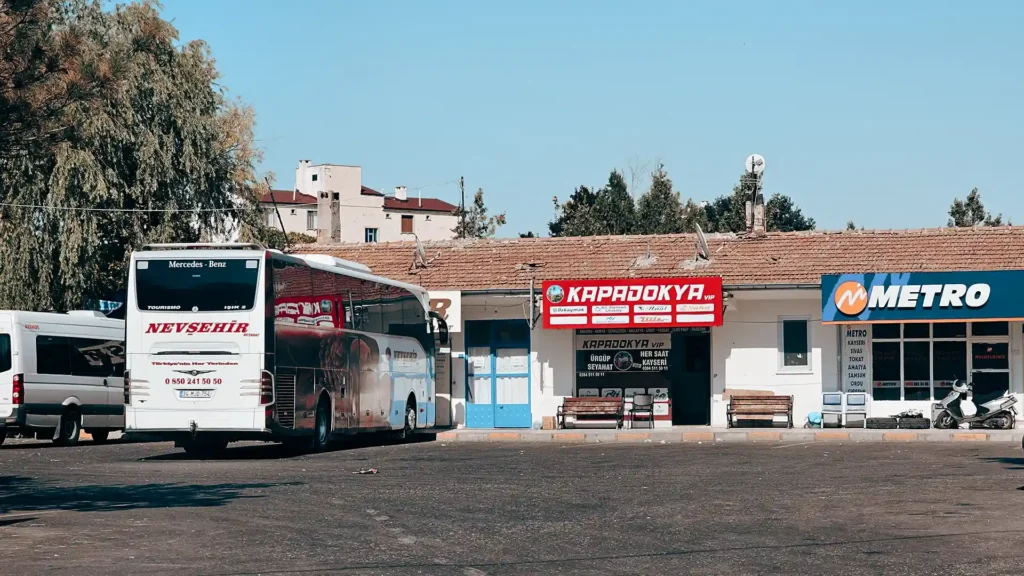
You can buy bus tickets in Turkey three ways: online through an English-language platform, at the bus company’s own website, or in person at the otogar. Online is easiest for visitors, tickets for most intercity routes cost €10–35, and you will be asked to state your gender during seat selection, a rule that surprises almost everyone the first time.
Turkish intercity buses are better than most visitors expect: reclining seats, tea service, rest stops every few hours. The system around them is what causes trouble, because almost none of it is explained in English. This guide covers the parts my guests ask about after they have already booked something wrong.
Last updated: 19 July 2026
This guide includes affiliate links to 12Go. Booking through them costs you nothing extra and helps keep the details on this page current.
Three Ways to Buy a Bus Ticket in Turkey
For a visitor, the practical choice is between two English-language platforms and the ticket window at the otogar. Buying directly from a Turkish bus company’s own website is technically the fourth option, but many of those sites are Turkish-only and some reject foreign credit cards, which is where most failed bookings start.
| Where You Buy | Language | Foreign Cards | Best For |
|---|---|---|---|
| 12Go | English | Accepted | Comparing buses and flights together |
| Obilet | English + 16 others | Accepted | Widest choice of Turkish operators |
| Company website | Often Turkish only | Sometimes rejected | Nothing, for most visitors |
| Otogar ticket desk | Turkish, some English | Cash is safest | Same-day travel, sold-out routes |
Booking Online: What the Screen Will Ask You
Online booking takes about three minutes, and the only step that confuses visitors is seat selection. You pick your route and date, choose a departure time, then land on a seat map showing which seats are taken and, next to each one, whether a man or a woman is sitting there. You select your own gender, and the system blocks any seat that would put you next to a stranger of the opposite sex.
This is not a legal restriction and it is not religious segregation, whatever you may read elsewhere. It is a comfort convention built into the ticketing software. Couples and families booking together are seated together with no issue at all, because the rule only applies to strangers. The side effect is what surprises solo travelers: a bus can look half empty while the system still refuses to sell you a specific seat. Nothing is wrong. Those seats are simply blocked for your gender.
Two more things worth knowing before you pay. Seat maps show which side of the bus faces the sun on that route, which matters on a seven-hour daytime run across the Anatolian plateau. And most services are either 2+1 or 2+2 layout. A 2+1 bus has single seats down one side, and for a solo traveler on a night bus that single seat is worth the small extra cost.
You can compare operators, times and prices for any Turkish route on 12Go, which shows buses and domestic flights on the same results screen.
Check routes, times and prices
12Go lists Turkish bus operators and domestic flights on one screen, in English, and accepts international cards.
Buying at the Otogar: How the Ticket Halls Work
Every Turkish city has an otogar, and it is not one ticket office but a hall of separate company desks competing for the same passengers. Walk in and staff will call out destinations at you. Say your destination, and they will tell you their next departure time and price. Nobody will tell you that the desk three doors down leaves forty minutes earlier, so ask at two or three desks before buying.
Bring your passport, because ticket sales are registered to a traveler ID and the desk will ask for it. Cash in lira is the safest payment method here; card acceptance varies by company and by desk. If a route is sold out online for the same day, the otogar is genuinely useful — desks hold seats that never reach the booking platforms.
The Servis Shuttle, and Why You Should Search for Göreme
The servis is a free connecting minibus that some bus companies run between their coaches and the town centre, and it is included in the ticket you already bought. Years ago almost every operator provided one. Today only certain companies do, so it is no longer something you can assume.
This changes how you should search. When you type your destination into the booking form, look for the actual town in the results list: Göreme, Ürgüp, Avanos. If the town appears as an option, that coach goes there, and you do not need a servis at all. Because these towns are tourist destinations, a large share of services from Istanbul run through to them directly.
The mistake I see most often is travelers choosing Nevşehir because it is the main terminal and looks like the safe, central option. It is the safe option for a Turkish traveler who knows the local connections. For a visitor with luggage it means arriving at a terminal 20 minutes short of the hotel, then working out the last leg alone. Search the town you actually want first, and use Nevşehir only if nothing direct exists on your date. The Istanbul to Cappadocia route page covers which services run through, and if you fly instead, the Kayseri Airport to Göreme guide handles the arrival leg.
At the departure end in large cities, some companies also run a servis that collects passengers from central pickup points and delivers them to the otogar. Ask about it when you buy your ticket. I have met guests who paid for a taxi across Istanbul to Esenler, without knowing their company had a free servis leaving ten minutes from their hotel.
What the Journey Itself Is Like
A long-distance Turkish coach stops for a break roughly every three hours, and an attendant serves tea, coffee and snacks on board between stops. Nearly every coach now has USB charging or a power socket at the seat. Sockets take the standard European two-round-pin plug at 220V, so travelers from the US and UK should pack an adapter.
One piece of advice I give every guest before a long ride: bring a neck pillow. I used one on my own overnight journeys for years, and supporting your neck is the single difference between arriving rested and arriving wrecked. Bring a jacket as well, because the air conditioning runs cold through the night, and keep your passport with you rather than in the luggage hold.
Rest Stops: What to Expect, and How Not to Miss the Bus
Rest stops last 15 to 30 minutes at highway service areas, and the larger ones are small complexes rather than petrol stations. You will find hot Turkish home cooking served canteen style, a market, snacks, souvenirs, and clean, sizeable toilets. On a ten-hour route these stops are where you eat properly, so use the big ones.
Here is the part that causes real anxiety, and no English guide mentions it. The attendant announces how long the break will last, and that announcement is usually in Turkish only. If nobody tells you in English, ask the attendant directly using a translation app before you step off the coach, and note the exact time you must be back.
The recall announcement over the service area speakers is also in Turkish. It names the bus company and the route, then says the vehicle is about to leave the terminal. A foreign passenger hears none of that as information meant for them. Set a phone alarm for two minutes before your return time and stay where you can see your coach.
Boarding: Why the Attendant Asks Where You Are Going
As you board, the attendant will ask which city you are traveling to. This is not a ticket check. Coaches serve several stops on one route, and your suitcase goes into the luggage compartment matching your destination so it is not buried under bags for a town three hours further on. Answer with your destination town, and your bag comes out easily when you arrive.
Common Mistakes First-Time Visitors Make
Four errors cause nearly every bus problem my guests describe. Booking on a Turkish-only company site with a foreign card and having the payment silently fail. Assuming the ticket ends at the town written on it, then discovering the servis leg on arrival. Cutting the connection too fine before a flight — road delays happen, and there is no rebooking safety net. And buying the cheapest overnight seat for a route where a €4 upgrade to a 2+1 single seat changes the whole night.
One planning note if Cappadocia is on your route. Balloon flights are decided before dawn by SHGM, Turkey’s civil aviation authority, and hotel pickups start around 04:30. Arriving on a morning bus and flying the same sunrise is not possible, so build in a night — the live Cappadocia balloon flight status page shows what conditions have been doing recently.
Yusuf Demir
Professional Tour Guide | Archaeology | History | Art
He has led more than 3,800 tours across Turkey — from the underground cities of Cappadocia to the marble streets of Ephesus. He also spent a year working ground crew and operations at a Cappadocia balloon company — he knows firsthand how SHGM makes pre-dawn flight decisions and what pilots look for before launch. His academic background in Archaeology, Art History, and History of Religions shapes every itinerary he designs. This guide reflects what he actually tells people on the ground, not what looks good on a brochure.