


Last updated: May 2026
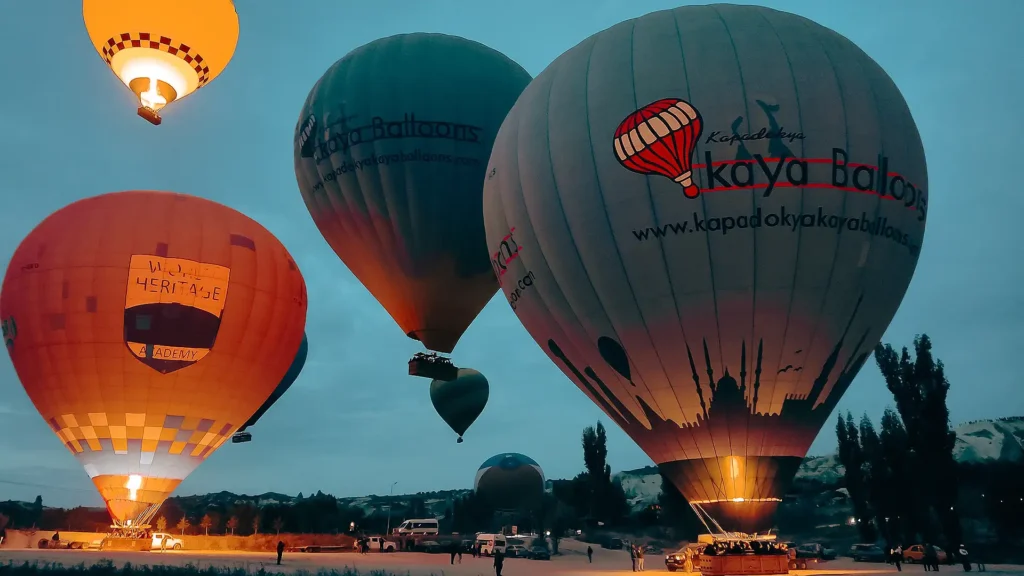
Cappadocia operates one of the most regulated commercial balloon programmes in the world — 367 balloons across 30 licensed companies, all overseen by SHGM (Sivil Havacılık Genel Müdürlüğü, Turkey’s Civil Aviation Authority). The no-fly decision is made before sunrise by a 12-pilot Meteorological Assessment Group across three flight sectors, and no operator can override it. This guide explains how that system actually works, why it matters for your booking, and exactly what to verify before you fly.
I’m Yusuf Demir, licensed guide and founder of Epic Turkey Travel. Before I started guiding, I spent a year on the ground crew at a Cappadocia balloon operation — inflating envelopes at 4 AM, watching pilots make the pre-dawn call, learning how the licensing system works from inside the cockpit. Most safety guides on Cappadocia balloons rely on operator brochures. This one doesn’t.
What SHGM Actually Regulates
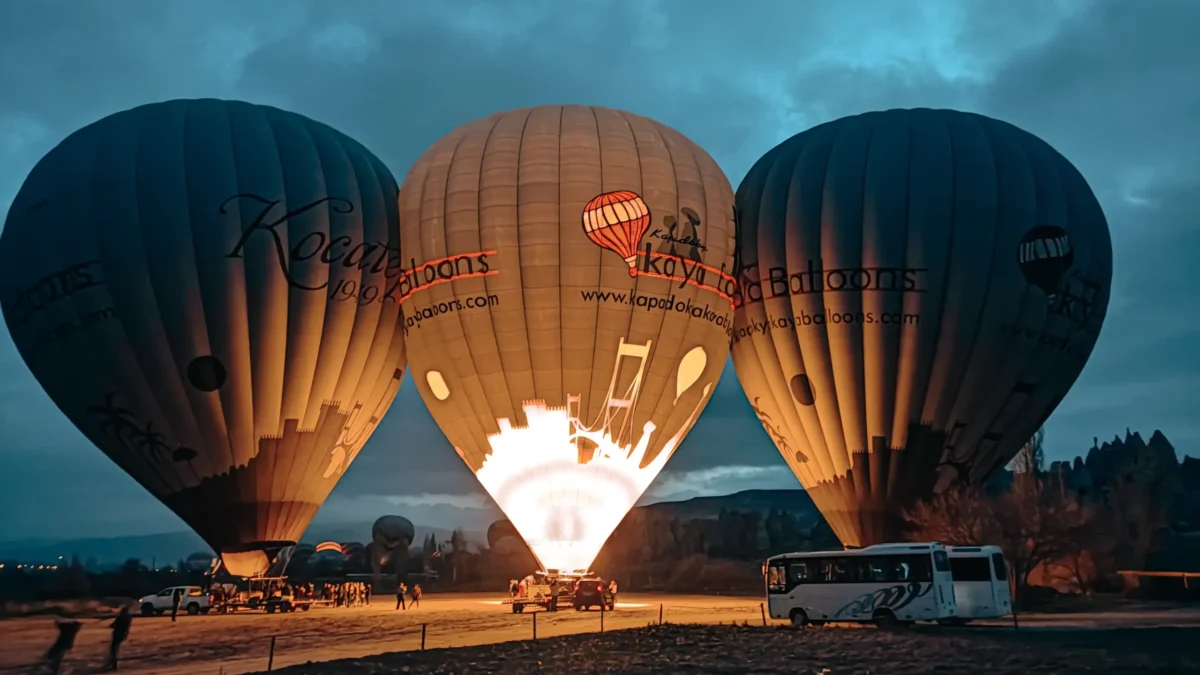
SHGM (Sivil Havacılık Genel Müdürlüğü) is Turkey’s Civil Aviation Authority — the federal body that licenses every commercial aircraft, pilot, and operator in the country, including hot air balloons. For Cappadocia, SHGM regulates four layers:
The operator licence. Every commercial balloon company in Turkey must hold a valid SHGM operating certificate. This certificate covers the company entity, its fleet of aircraft, and its insurance obligations. A licence number is public information — if an operator cannot or will not show you theirs, that is your answer.
The pilot certification. Every Cappadocia balloon pilot holds an SHGM commercial pilot licence specific to hot air balloons. This involves a minimum number of flight hours, a written examination, and recurrent medical certification. Pilots cannot fly outside their certificate scope.
The aircraft certification. Each balloon (envelope, basket, burner system) is registered with SHGM and inspected on a fixed schedule. Basket capacities are fixed by regulation at registration — operators cannot exceed them by adding “one more person” on a busy morning.
The flight authorisation. This is the part most travellers don’t see. Before any flight window opens, SHGM’s Slot Service Center publishes a colour-coded meteorological ruling for the Cappadocia flight zone. This ruling is mandatory: a red flag grounds the entire commercial fleet, regardless of any individual operator’s opinion.
How the No-Fly Decision Is Actually Made
The pre-dawn weather call is the most misunderstood part of Cappadocia ballooning. Travellers often assume it’s the operator deciding whether to launch. It isn’t.
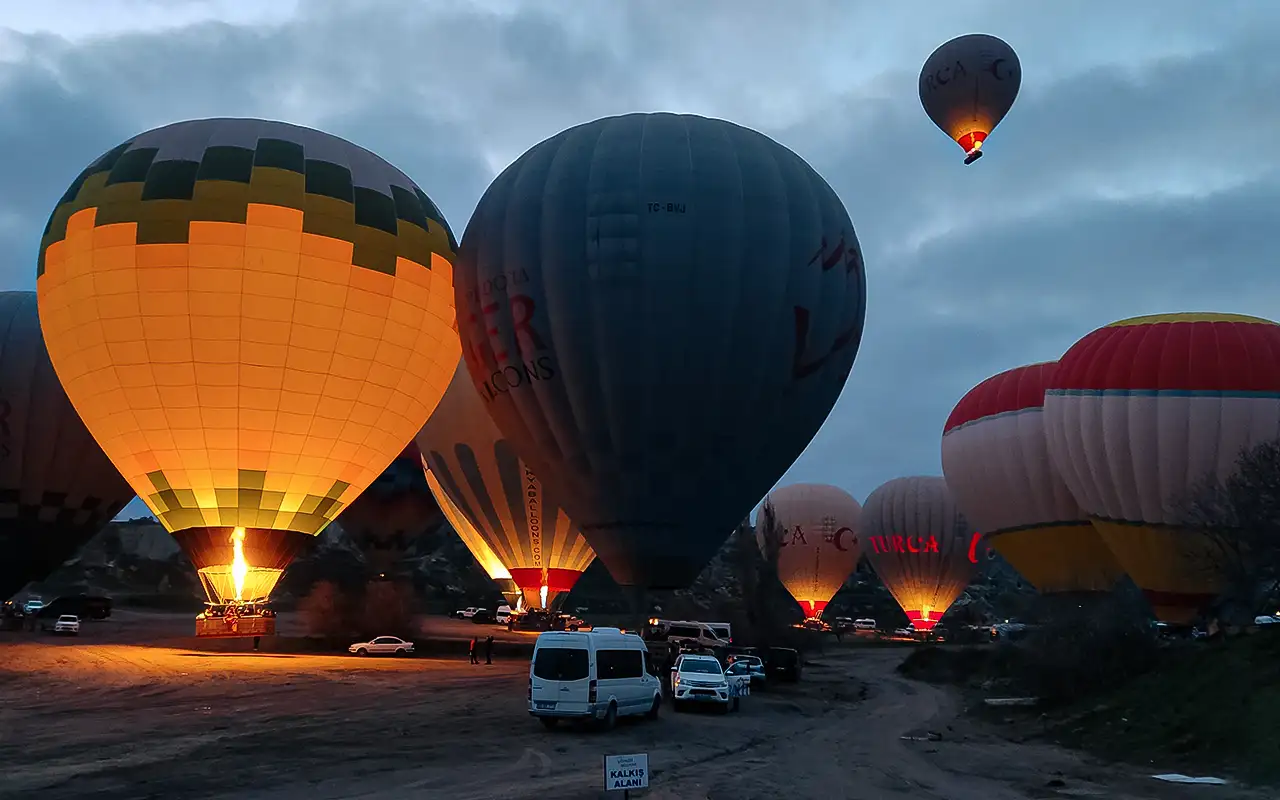
SHGM’s Cappadocia operations are coordinated through a 12-pilot Meteorological Assessment Group (MDG). Each morning, before the launch window opens, MDG members conduct physical weather checks across three designated flight sectors — A, B, and C — covering the operational airspace over Göreme, Avanos, and the surrounding valleys. The MDG then issues a sector-by-sector ruling:
- Red flag: no-fly for all commercial operators in that sector
- Yellow flag: stand-by, no launches permitted, ruling may be upgraded
- Green flag: launch authorisation passes to the individual pilot and balloon company
A green flag is not a guarantee that any specific flight will operate — it returns the final call to the pilot, who makes the launch decision based on conditions at the inflation site. On busy summer mornings, up to 156 balloons operate simultaneously across the three sectors. Managing that traffic in a confined airspace is only possible because of the slot coordination system — which is the first of its kind in the world for commercial balloon operations.
The MDG ruling is published in real time at shm.kapadokya.edu.tr. For a live view of today’s status across all three sectors, I publish a real-time tracker at Cappadocia Balloon Flight Status.
The Safety Record — And What Risk Actually Means
Cappadocia handles 40,000–50,000 balloon passengers per year across roughly 220–235 flight days. The commercial safety record is among the strongest in global ballooning, and the regulatory framework above is the reason.
On a clear morning, more than 30 SHGM-licensed operators launch over Göreme National Park. The slot coordination system manages up to 156 simultaneous balloons across three flight sectors.That said, like any aviation activity, risk cannot be reduced to zero. Wind shear, basket-edge impact during a hard landing, and occasional pilot judgement errors are the documented risk categories in commercial ballooning worldwide. The Cappadocia system is designed specifically to minimise the first category (the MDG ruling), regulate the second (mandatory landing-position briefings, basket-edge padding), and audit the third (pilot recurrent training, post-incident investigation).
What this means in practice: if your flight is cancelled at 4:30 AM after the MDG ruling, that is the system working — not a problem to argue around. For a full breakdown of why and when flights cancel by month, see my Cappadocia balloon cancellation guide.
How to Verify Your Operator Before You Book
Three things are worth checking before any Cappadocia balloon booking — direct or through an agency:
1. Ask for the SHGM licence number. A legitimate operator can provide this immediately and in writing. It identifies the company, not just a marketing name. Cappadocia has 30 licensed balloon companies; if a brand name doesn’t appear on SHGM’s published operator list, ask why before paying.
2. Confirm basket capacity. Cappadocia balloons carry between 8 and 24 passengers depending on the operator and basket configuration. Smaller baskets offer more personal space and better sightlines for photography. If basket size matters to you, ask specifically — and ask in writing.
3. Understand pricing logic. A handful of established Cappadocia operators set fixed seasonal prices. The rest adjust daily based on demand, weather forecasts, and availability across the 367-balloon fleet. The price you see on a Tuesday may not be the price on Wednesday. This is not a scam — it’s the structure of the sector. What matters is that the price quoted to you matches the operator’s licence and what’s actually delivered.
I only work with SHGM-licensed operators, and I confirm current pricing in writing before every Cappadocia hot air balloon flight booking I take. If you’d rather verify operator credentials before deciding, you can contact us with the operator name and I’ll check the SHGM licence status directly.
Operator Insurance vs Personal Travel Insurance
This is the question that catches the most travellers out. Under Turkish civil aviation regulations (Resmî Gazete No: 30136, dated 27 July 2017, with legal basis in Law No. 2920 of the Turkish Civil Aviation Code), every licensed balloon operator in Turkey must carry mandatory passenger liability insurance. The minimum coverage for hot air balloons is 125,000 SDR per passenger — approximately 165,000 USD at current rates — for death or bodily injury occurring during takeoff, flight, or landing.
This is operator liability coverage. It activates only when something happens inside the basket or during ground operations directly tied to the flight — boarding, inflation, the flight itself, the landing. The legal language is precise: it covers “death or bodily injury during the time onboard the aircraft, or during boarding or disembarking.” If your flight is cancelled, if your camera breaks, if you slip in the hotel parking lot before pickup — none of that is operator insurance territory. Operators that cannot maintain this minimum coverage have their licence revoked on a second offence under the same regulation.
What operator flight insurance does not cover: trip cancellation due to weather, medical evacuation to your home country, pre-existing medical conditions, lost or damaged personal belongings (cameras, phones, jewellery), or any indirect costs like missed connecting flights or extra hotel nights. These categories require personal travel insurance. Critically, most standard travel insurance policies exclude “aviation activities” by default, and that exclusion can include hot air ballooning unless your policy explicitly adds it back in. Generic “adventure activity” coverage may not be enough — the policy wording needs to mention hot air ballooning specifically.
Before you fly, run a 5-minute check with your insurance provider: ask them to confirm in writing that your policy covers hot air ballooning as a named activity. Some providers offer a “Cancel For Any Reason” (CFAR) rider that returns 50–75% of prepaid costs if you cancel for personal reasons — useful if your travel dates are flexible. The base operator insurance is the legal floor. Personal travel insurance is what protects everything around it.
Common Questions About Cappadocia Balloon Safety
Cappadocia has one of the strongest commercial balloon safety records in the world. Every operator is SHGM-licensed, every pilot is certified, and the no-fly decision is made by a 12-pilot Meteorological Assessment Group across three flight sectors before each launch window. Risk cannot be reduced to zero, but the regulatory framework is specifically designed to minimise the conditions that cause balloon incidents elsewhere.
SHGM (Turkey’s Civil Aviation Authority) decides the launch authorisation through its 12-pilot Meteorological Assessment Group. The MDG issues a colour-coded ruling (red, yellow, green) for each of three flight sectors before every flight window. A green ruling passes the final go/no-go decision to the individual pilot based on conditions at the inflation site.
Ask the operator for their SHGM licence number in writing. Every commercial balloon company in Turkey is required to hold an SHGM operating certificate, and the licence number identifies the company entity, its fleet, and its insurance. SHGM publishes the operator list publicly; if a brand name doesn’t appear, ask why before paying.
Cappadocia balloons carry between 8 and 24 passengers per basket, depending on the operator and basket configuration. Capacities are fixed by SHGM at aircraft registration — operators cannot exceed them on a busy morning. Smaller baskets offer more personal space and better sightlines; ask the operator for exact capacity before booking.
Yes — but only for what happens during the flight itself. Turkish civil aviation regulations (Resmî Gazete No: 30136, 2017) require every licensed balloon operator to carry passenger liability insurance with a minimum coverage of 125,000 SDR per passenger — approximately 165,000 USD — for death or bodily injury occurring during takeoff, flight, or landing. This is operator liability coverage, not personal travel insurance. It does not cover trip cancellation, medical evacuation back to your home country, pre-existing medical conditions, or your personal belongings (cameras, phones, jewellery). Most standard travel insurance policies also exclude aviation activities by default, so a separate policy that explicitly mentions hot air ballooning as a named activity is recommended.
Cappadocia has over 30 licensed balloon operators flying 367 balloons in total. A handful of established operators set fixed seasonal prices; the rest adjust daily based on demand, weather forecasts, and fleet availability. Higher prices often reflect smaller basket sizes, premium operators, or peak-season demand — not necessarily better safety, since the SHGM regulatory framework applies equally to every licensed company.
Yusuf Demir
Professional Tour Guide | Archaeology | History | Art
He has led more than 3,800 tours across Turkey — from the underground cities of Cappadocia to the marble streets of Ephesus. He also spent a year working ground crew and operations at a Cappadocia balloon company — he knows firsthand how SHGM makes pre-dawn flight decisions and what pilots look for before launch. His academic background in Archaeology, Art History, and History of Religions shapes every itinerary he designs. This guide reflects what he actually tells people on the ground, not what looks good on a brochure.